
"central china"
5000 article(s) found

Main producing areas and characteristics of Fine Coffee
Coffee production zones (commonly known as coffee belts) range from 25 degrees north latitude to 30 degrees south latitude, covering many countries in Central, West Africa, the Middle East and South Asia, the Pacific, Latin America and the Caribbean. The reason why coffee cultivation is concentrated in this area is mainly due to the limitation of temperature. Because coffee trees are vulnerable to frost, neither north nor south latitude is suitable, especially in the tropics.

History and present situation of Coffee cultivation in China
History of Coffee cultivation in the World Coffee originated in the tropics of northern and central Africa. It has been cultivated for more than 2000 years, and the Arabs began to plant it in 525 BC. At first, coffee beans were only used for chewing. In 890 AD, Arab merchants brought coffee to Yemen and made it into a drink for the first time. By the 13th century, Arabs had become in the habit of stir-frying coffee, but to
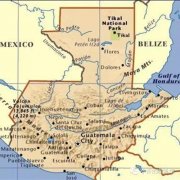
World Coffee Tour A big coffee producer in Guatemala and Central America
Guatemala is a big coffee producer in Central America, ranking eighth in the world in terms of output. Guatemala, whose name comes from the Mayan language, means thelandofmanytrees, the country of the forest. Located in Central America, it is known as the pearl in the crown of China and the United States. Although Guatemala has a limited land area, it has a rich and diverse climate. A country famous for lakes and volcanoes, volcanic soil,

Main producing areas and characteristics of Coffee in the World
Coffee production zones (commonly known as coffee belts) range from 25 degrees north latitude to 30 degrees south latitude, covering many countries in Central, West Africa, the Middle East and South Asia, the Pacific, Latin America and the Caribbean. The reason why coffee cultivation is concentrated in this area is mainly due to the limitation of temperature. Because coffee trees are vulnerable to frost, neither north nor south latitude is suitable, especially in the tropics.

The main producing areas and characteristics of Coffee in the World
Coffee production zones (commonly known as coffee belts) range from 25 degrees north latitude to 30 degrees south latitude, covering many countries in Central, West Africa, the Middle East and South Asia, the Pacific, Latin America and the Caribbean. The reason why coffee cultivation is concentrated in this area is mainly due to the limitation of temperature. Because coffee trees are vulnerable to frost, neither north nor south latitude is suitable, especially in the tropics.

The History and present situation of Coffee cultivation in China
History of Coffee cultivation in the World Coffee originated in the tropics of northern and central Africa. It has been cultivated for more than 2000 years, and the Arabs began to plant it in 525 BC. At first, coffee beans were only used for chewing. In 890 AD, Arab merchants brought coffee to Yemen and made it into a drink for the first time. By the 13th century, Arabs had become in the habit of stir-frying coffee, but to
The Guangzhou Division of the World siphon Pot Competition came to a successful end.
From August 16 to 17, sponsored by the Pu'er Municipal Government of Yunnan Province and co-sponsored by the Coffee Salon and Yiwai Coffee, the Pu'er Coffee and the first Chinese Pu'er Coffee Cup World siphon Pot Competition [Guangzhou Station] ended perfectly. The top three contestants in Guangzhou, with the top three in North China, Northeast China, East China, Central China, Southwest and Northwest.

Basic knowledge of coffee in main producing areas and characteristics of coffee
Coffee production zones (commonly known as coffee belts) range from 25 degrees north latitude to 30 degrees south latitude, covering many countries in Central, West Africa, the Middle East and South Asia, the Pacific, Latin America and the Caribbean. The reason why coffee cultivation is concentrated in this area is mainly due to the limitation of temperature. Because coffee trees are vulnerable to frost, neither north nor south latitude is suitable, especially in the tropics.

Introduction of Guatemalan boutique coffee bean brands with very strong flavor
There is a wide gap between the rich and the poor in Guatemala, with the top 10% of the population accounting for 42.4% of the country's wealth, while the bottom 10% of the population accounts for only 1.3% of the country's wealth, with a Gini coefficient of 0.55. Starting from January 1, 2010, the minimum wage for at-risk workers was raised to 56 quetzales ($6.71) per person per day, plus a bonus of 250 quetzals ($29.97) per month. [1] Medical 2009, Guatemala
Deng Li Yuanyu, King of Coffee Industry in Vietnam
At 07:50 on a warm morning in Hanoi, the philosophical king of Vietnam's powerful coffee industry was enjoying the first cigar of the day, with only the last two inches left. General Manager Deng Li Yuanyu (Dang Le Nguyen Vu) dresses casually and wears a Panama straw hat. It is said that he prefers Cuban Cohiba cigars, but this is Davidoff.

Fine Coffee the main producing areas and characteristics of coffee in the world
Coffee production zones (commonly known as coffee belts) range from 25 degrees north latitude to 30 degrees south latitude, covering many countries in Central, West Africa, the Middle East and South Asia, the Pacific, Latin America and the Caribbean. The reason why coffee cultivation is concentrated in this area is mainly due to the limitation of temperature. Because coffee trees are vulnerable to frost, neither north nor south latitude is suitable, especially in the tropics.
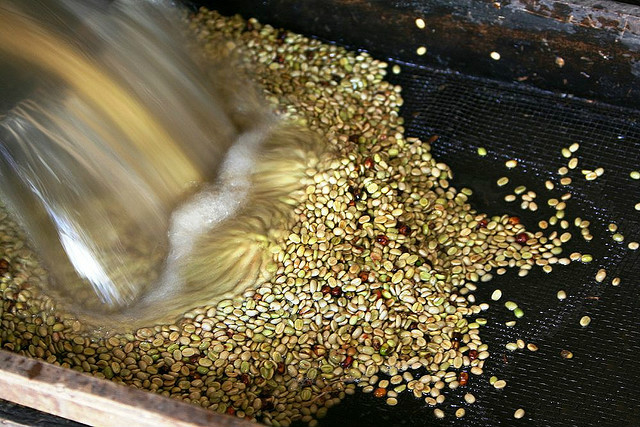
Coffee beans Central American region Honduras choose Highland Coffee Honduran Coffee beans hand-washed Honduras
Speaking of Honduran coffee, many people may feel very strange. Is there coffee in Honduras? In my impression, this is one of the most restless countries in China and the United States, and the current political situation is still very unstable. The only thing that can be connected with it is the world-famous diving resort of Honduras Blue Cave. Coffee? Will there be coffee production in such a chaotic country? But, indeed, Hong

Indonesia's plan to build the world's second-largest coffee producer is difficult
Following Kaiping (official Wechat account vdailycom) found it difficult for Indonesia to open a small shop of its own to build Indonesia into the world's second largest coffee producer, as it will be difficult for entrepreneurs to increase Indonesian coffee production from 690000 1000 tons to 1 million tons this year if they fail to improve the productivity of coffee plantations. Paranordo, vice president of AEKI. Sunaldo (Pranoto Soe

Introduction to the characteristics of the aromatic and authentic El Salvador Himalayan coffee flavor manor
Salvadoran coffee ranks side by side with Mexico and Guatemala as the producers of Asa and Merdo, and is fighting for the top one or two places in China and the United States with other countries. The highlands of origin are large coffee beans of all sizes, which are fragrant and mild in taste. Like Guatemala and Costa Rica, coffee in El Salvador is graded according to altitude, and the higher the altitude, the better the coffee

Introduction to the Hope Manor in the Coffee producing area of the Central Mountains in central Colombia
Three main varieties of the Central Mountains of central Colombia. Medellin coffee is full-bodied, rich in taste, meticulous and sour with blending. The concentration and acidity of Armenia and Manizale coffee were lower. These three varieties are called MAM in the coffee market. Bogota and Bucaramanga are produced in Bogota, the capital of Colombia, in the eastern mountains that surround Colombia. Bogota coffee quilt

China Coffee Information Yunnan Coffee via Chongqing New Europe Special Train to Europe
Chongqing Morning Post reporter Cao Jiazhi yesterday at 10:00, the Yuxin European coffee train full of coffee beans, roasted fried beans, and instant powder from the back valley of Yunnan set out from the railway central station of Tuanjie Village. 14 days later, this batch of coffee will appear in Duisburg, Germany. This also marks that Chongqing will become an important transit station for global coffee beans. In the next three years, there will be 1 million tons of coffee from Yunnan and Southeast Asia.

History of Colombian Coffee beans Green Gold China Coffee Trading Network
History traces back to Colombian coffee brand Colombian coffee brand (9) the history of coffee cultivation in Colombia can be traced back to the Spanish colonial era in the 16th century, and there are many theories about the history of coffee in Colombia: one: it is said to come from the island of the Caribbean and by sea through El Salvador in Central America. Second: in 1808, a priest came from French Ann.

Chinese coffee has ushered in a recovery period with the country's reform and opening up.
From December 18 to 22, 1978, the third plenary session of Communist Party of China's 11th Central Committee was held in Beijing. The main achievements of this conference are: re-establishing the party's Marxist ideological line. The plenum resolutely criticized the two general erroneous policies, spoke highly of the discussion on the standard of truth, and determined to emancipate the mind, use the brain, seek truth from facts,
High-quality coffee produced by backward countries gifts from baristas in Honduras and China
Although it is now a backward and chaotic country, this small Central American country is also a region of Mayan civilization, with many relics of Mayan civilization and beautiful tropical seaside scenery. If it were not for such a turbulent situation, it will certainly become a tourist destination. Had it not been for such a turbulent situation, the coffee here would have been better. Honduran coffee comes from Sal.

The Origin and Historical and Cultural spread of Coffee introduction to the first Cafe in China
The legend of Sheikh Omar is the story recorded by the Islamist Abdarkadi in his Book of Coffee in 1587. The stage of the story is in the Yemeni mountains of the 13th century: in 1258, Sheikh Omar, the chief expelled by his people for crime, was hungry and tired when he wandered to Wassaba, Arabia, far from his hometown of Mocha. when he sat at the root of a tree